
Thousands of students are searching for answers after discovering their names are missing from the laptop eligibility criteria list in 2026. Many students expected to qualify because of strong academic performance, verified admissions, or active enrollment status. However, a large number of applicants are still facing confusion. This issue has become one of the biggest student concerns in 2026. Social media discussions, student forums, and educational communities are full of complaints from students asking why they are not appearing in the official laptop scheme data. The growing demand for digital education has made laptop schemes more important than ever. Students now depend on laptops for online classes, assignments, AI tools, research work, freelancing, coding, and professional development. Missing from the eligibility list can feel disappointing, especially for students who truly need technological support.
The good news is that many eligibility problems can still be fixed. In most cases, students are rejected because of incomplete records, verification delays, academic data mismatches, or simple registration mistakes. This complete guide explains everything students need to know about missing eligibility criteria in 2026. It includes the latest updates, common rejection reasons, verification methods, correction steps, and expert tips to improve approval chances.
What Is the Laptop Scheme 2026?
The Laptop Scheme 2026 is a student support initiative designed to help deserving students receive laptops for educational use. The program focuses on improving digital learning opportunities and helping students compete in a technology-driven world. Most laptop schemes target:
- University students
- College students
- Technical education students
- High-achieving students
- Students from low-income backgrounds
- Students enrolled in public sector institutions
The main purpose of these schemes is to reduce the digital divide. Governments and educational authorities believe students should have access to modern tools for learning, research, and career development. In 2026, digital education will become more advanced because of AI learning systems, online classrooms, cloud assignments, and virtual academic collaboration. As a result, laptop schemes are receiving huge attention. Students are especially excited because modern laptops allow them to:
- Attend online classes
- Learn programming
- Use AI tools
- Access educational software
- Create presentations
- Start freelancing
- Build online careers
- Improve technical skills
Read More detail : Stay Updated with Every Govt Scheme & Relief Program
Why Are Students Missing From Eligibility Lists?
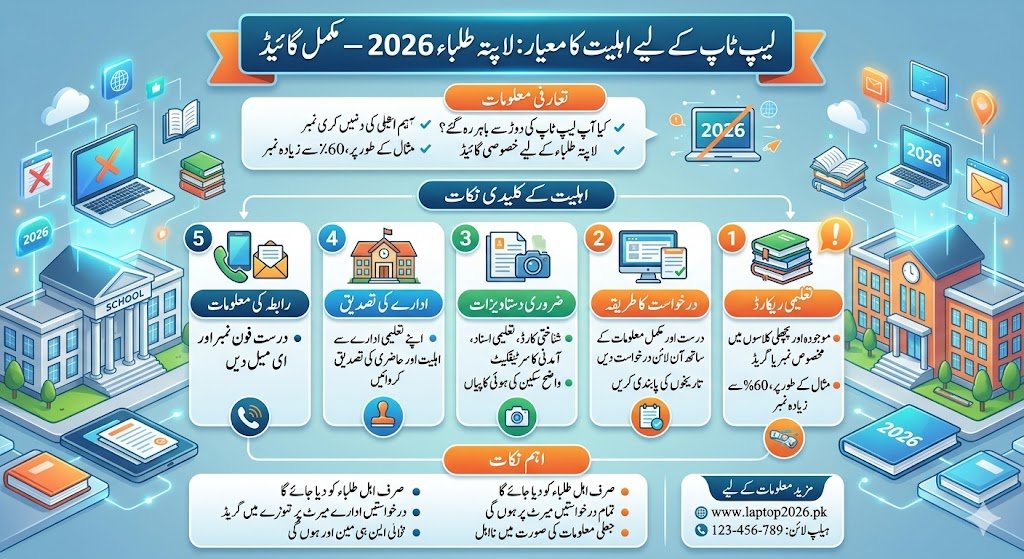
One of the biggest concerns in 2026 is that many deserving students cannot find their names in the eligibility list. This issue can happen for several reasons. Some students may have incomplete academic records. Others may face university verification delays. In many cases, institutions submit student data late, causing temporary disqualification. Another major issue is incorrect registration information. Even a small spelling mistake in the student name, CNIC number, registration number, or department code can create problems during verification. Many students also fail to meet minimum attendance or CGPA requirements without realizing it. Some common reasons include:
- Incorrect student information
- Missing documents
- Incomplete registration forms
- Institution verification pending
- Academic performance below criteria
- Duplicate applications
- Enrollment status not updated
- Technical portal issues
- Merit competition becoming higher
Students should not panic immediately after seeing missing eligibility status because updates often continue during the verification phase.
Latest Laptop Scheme 2026 Update
The latest updates in 2026 show that educational authorities are improving the verification system to reduce unfair rejections. Several institutions have started rechecking student records after complaints from students across different universities and colleges. Students are also being encouraged to:
- Update academic profiles
- Verify enrollment details
- Submit missing documents quickly
- Contact university focal persons
- Monitor official portals regularly
Authorities are focusing on transparency because student demand has reached record levels in 2026.Many institutions are also introducing digital complaint systems where students can request eligibility reviews. This update has given hope to thousands of students who were previously marked as ineligible.
Common Eligibility Criteria for Students
Every laptop scheme may have slightly different rules, but most programs use similar eligibility conditions. Below are some of the most common requirements students must meet. Students often need:
- Minimum CGPA
- Minimum percentage
- Good academic standing
- No disciplinary record
Enrollment Status
Students must usually be:
- Currently enrolled
- Active in the semester
- Registered in approved institutions
Attendance Requirements
Some programs require minimum attendance percentages.
Degree Program Eligibility
Eligibility may apply only to:
- BS programs
- MS programs
- Technical diplomas
- Selected departments
National Identity Verification
Students may need valid:
- CNIC
- B-Form
- Student ID
Institution Verification
Universities must confirm student information before final approval.
Major Reasons Students Become Ineligible
Low Academic Performance :Students below the required CGPA or percentage may become automatically ineligible.
Incorrect Personal Information
Even small mistakes can create serious problems. Examples include:
- Wrong CNIC number
- Incorrect student roll number
- Misspelled name
- Wrong department selection
Unverified Enrollment :Some students are admitted but their records are not updated in central databases.
Duplicate Applications :Submitting multiple forms can trigger automatic rejection.
Missing Deadline :Late applications are usually rejected.
Institution Not Included :Some institutions are not part of certain laptop distribution phases.
Incomplete Documents :Missing transcripts, photos, or identity documents may delay approval.
How to Check Laptop Eligibility Status
Students should regularly check their eligibility through the official student portal or university announcements. Usually, the process includes:
- Opening the student portal
- Entering CNIC or registration number
- Checking verification status
- Reviewing eligibility response
- Downloading confirmation if approved
Students should carefully read every notification because some statuses are temporary.
For example:
- Pending Verification
- Under Review
- Institution Verification Required
- Data Correction Needed
- Eligible
- Ineligible
A pending status does not always mean rejection.
Read More Detail : Stay Updated with Every Govt Scheme & Relief Program
How to Fix Missing Eligibility Problems
Students can often solve eligibility issues by taking quick action. Most institutions appoint official focal persons for laptop schemes.
Students should:
- Explain the issue clearly
- Provide documents
- Request verification updates
Update Academic Records
If semester results or CGPA are outdated, students should ask their department to update records.
Correct Portal Errors
Students should immediately fix:
- Name spelling errors
- CNIC mistakes
- Wrong course details
- Incorrect phone numbers
Submit Missing Documents
Many applications remain incomplete because students forget required files.
Monitor Notifications
Authorities may reopen correction windows for students facing genuine problems.
Required Documents for Verification
Students should prepare all documents before applying. Important documents often include:
| Document | Purpose |
| Student ID Card | Enrollment verification |
| CNIC or B-Form | Identity confirmation |
| Academic Transcript | Merit verification |
| Passport Size Photo | Official records |
| Admission Letter | Program confirmation |
| Fee Receipt | Active student proof |
| Domicile Certificate | Regional verification |
Keeping scanned copies ready can help students avoid delays.
University and College Verification Process
Verification is one of the most important stages. Educational institutions usually confirm:
- Student enrollment
- Semester status
- Attendance records
- Academic performance
- Degree program validity
If universities delay uploading data, students may temporarily disappear from eligibility lists. This is why many students experience confusion during the early phases. Institutions are now using digital systems to improve verification speed in 2026.
Merit System Explained
Laptop schemes often use merit-based selection. This means competition can become intense, especially in large universities. The merit system may consider:
- CGPA
- Academic percentage
- Department performance
- Semester ranking
- Financial background
- Regional quotas
In high-demand programs, even good students may not qualify immediately because the number of applicants exceeds available laptops.This has become a major issue in 2026 due to rising student enrollment.
Common Student Mistakes During Registration
Many students accidentally reduce their approval chances. Here are the most common mistakes:
- Using Incorrect Information :Students sometimes use old registration numbers or outdated records.
- Ignoring Instructions :Many applicants skip important instructions and upload incomplete forms.
- Missing Verification Emails :Some portals require email confirmation.
- Uploading Blurry Documents :Poor-quality scans can delay approval.
- Applying Late :Heavy traffic near deadlines can create portal issues.
- Not Checking Status Again :Students often assume submission means approval. Regular status checks are extremely important.
Students From Remote Areas Facing Challenges
Students from rural and remote areas often face additional problems. These include:
- Slow internet access
- Limited awareness
- Delayed university communication
- Difficulty uploading documents
- Lack of technical support
Despite these challenges, digital education programs are expanding rapidly. Authorities are now focusing more on equal access because students from smaller towns also need modern educational opportunities. The expansion of digital learning is becoming a major educational transformation in 2026.
How Laptop Schemes Help Students
Laptop schemes are changing student lives in powerful ways. Students can now:
- Learn online skills
- Access global educational resources
- Use AI learning tools
- Start freelancing careers
- Improve research capabilities
- Attend virtual workshops
- Build technical experience
Many students also use laptops for:
- Graphic design
- Programming
- Video editing
- Digital marketing
- Online tutoring
- E-commerce
Technology access is now directly connected to career growth. This is why laptop schemes are considered one of the most important educational support initiatives.
What Students Should Do Before Deadlines
Students should avoid waiting until the final days. Important steps include:
Check:
- Student name
- Registration number
- Department
- Semester details
- Academic status
- Prepare Documents :Keep scanned copies organized.
- Monitor Official Announcements :Deadlines may change during different phases.
- Stay in Contact With Departments :Institution updates are extremely important.
- Keep Screenshots :Save proof of successful application submissions.
Expected Laptop Distribution Timeline
Although timelines vary, most schemes follow a similar process.
- Phase 1 – Registration :Students submit applications online.
- Phase 2 – Verification :Institutions confirm student data.
- Phase 3 – Merit Preparation :Authorities prepare final merit lists.
- Phase 4 – Approval :Eligible students receive confirmation.
- Phase 5 – Distribution :Laptop ceremonies or collection centers are announced. In 2026, many students expect faster distribution because digital systems have improved significantly.
Tips to Increase Approval Chances
Students can improve their chances by following smart strategies.
- Maintain Strong Academic Performance :Better grades improve merit ranking.
- Keep Records Updated :Ensure university data matches official documents.
- Apply Early :Early applications reduce technical risks.
- Stay Active Academically :Attendance and active enrollment matter.
- Follow Official Instructions Carefully :Read every step before submission.
- Avoid Duplicate Applications :Multiple entries can create confusion.
- Respond Quickly to Notifications :Correction windows are often limited.
Read More Detail : Stay Updated with Every Govt Scheme & Relief Program
Eligibility Problems and Solutions Table
| Problem | Possible Cause | Recommended Solution |
| Name missing from list | Verification pending | Contact institution focal person |
| Application rejected | Low CGPA | Review merit requirements |
| Portal not showing data | Technical issue | Retry later or contact support |
| Incorrect student details | Registration mistake | Update information immediately |
| Documents not accepted | Blurry uploads | Upload clearer scanned copies |
| Duplicate application issue | Multiple submissions | Request manual review |
| Enrollment mismatch | University records outdated | Ask department for updates |
| Pending status for long time | Verification delay | Follow up regularly |
Biggest Challenges Facing Students in 2026
The competition for educational support programs has become much stronger. Some of the biggest challenges include:
- Rising number of applicants
- Limited laptop availability
- Strict merit systems
- Technical portal overload
- Verification delays
- Unequal internet access
Despite these challenges, educational authorities are expanding digital learning initiatives. Experts believe future laptop schemes may include:
- AI-powered verification
- Faster approvals
- Wider student coverage
- Better transparency systems
- Real-time tracking dashboards
Students are hopeful these improvements will reduce confusion and improve fairness.
FAQs
1. Why is my name missing from the laptop eligibility list in 2026?
Your name may be missing because of incomplete documents, verification delays, incorrect academic records, or low merit ranking. Students should recheck their application details and contact their institution for updates.
2. Can I correct mistakes in my laptop scheme application?
Yes, many laptop schemes allow students to correct errors during the verification or review phase. You should update incorrect information as soon as possible before the final merit list is announced.
3. What documents are required for laptop eligibility verification?
Most schemes require a student ID card, CNIC or B-Form, academic transcript, admission proof, and recent passport-size photographs for verification.
4. Does low CGPA affect laptop scheme eligibility?
Yes, academic performance is one of the main selection factors. Students with low CGPA or poor attendance may become ineligible depending on the merit criteria.
5. How can students improve their chances of approval?
Students should apply early, keep records updated, submit clear documents, maintain good academic performance, and regularly monitor official portal notifications.
Conclusion:
Laptop eligibility issues in 2026 are affecting many students, but most problems can be solved through proper verification and updated records. Students should carefully review their application details, stay connected with their institutions, and follow official updates regularly. As digital education continues to grow, laptop schemes remain an important opportunity for students to improve learning, skills, and future career chances.